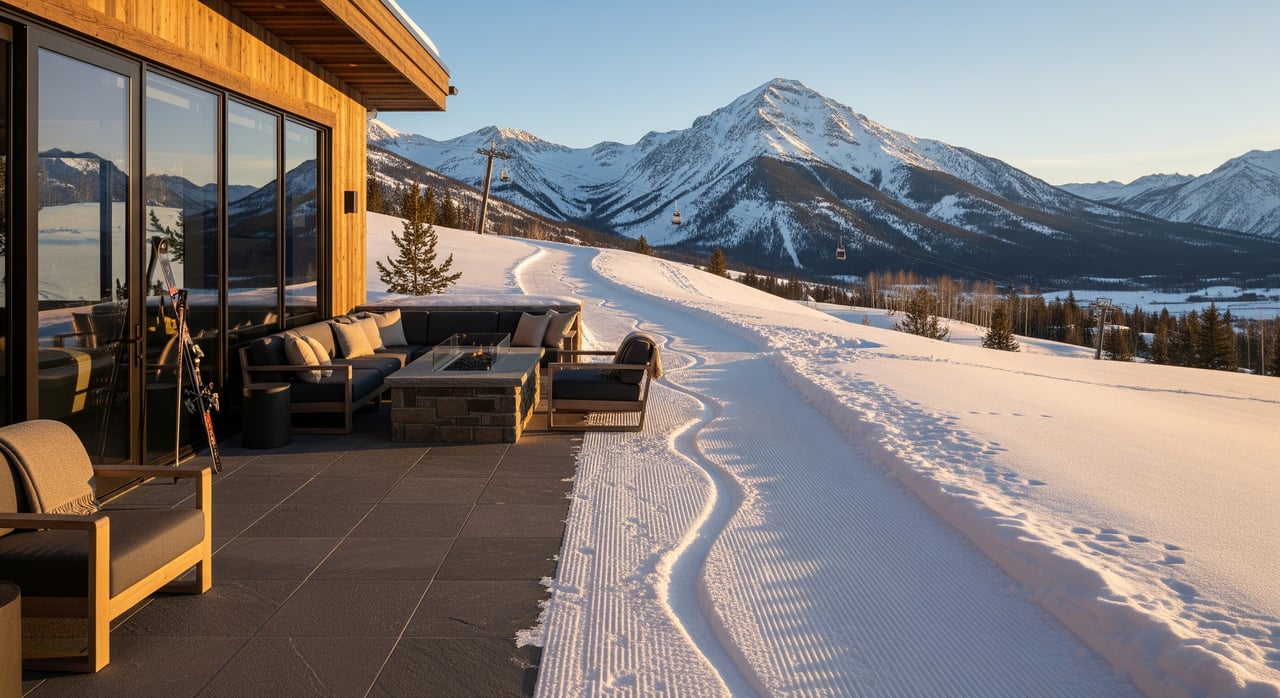
If you have ever scrolled Big Sky listings and wondered why so many say “ski-in/ski-out,” you are not alone. The phrase sounds simple, but the reality on the mountain can vary a lot from one property to the next. Understanding the differences helps you protect your budget, your rental goals, and your everyday ski routine. In this guide, you will learn how “true” ski-in/ski-out works in Big Sky, how to verify access, and how it affects pricing and rentals. Let’s dive in.
Ski-in/ski-out in Big Sky defined
Before you fall in love with a view or a floor plan, make sure you are speaking the same language as the listing.
- True ski-in/ski-out: You leave your door, private deck, or a maintained walkway and click into skis on resort-maintained terrain or an approved connector. You reach a lift or an on-piste destination without taking skis off and without crossing public roads or private land without an easement.
- Ski-access: You can reach the property by ski with some tradeoffs. You may need a short walk, a bootpack, a road or parking crossing, or to traverse unmarked or ungroomed terrain. Routes might be legal but not maintained by the resort.
- Shuttle-access: You rely on a resort or private shuttle to reach lifts or a base area. You cannot ski directly to or from the property, and convenience depends on the shuttle schedule.
Local factors that change access
Resort boundary and trail map
Only routes inside Big Sky Resort’s maintained network typically qualify as true ski-in/ski-out. The official trail map and boundary determine what is groomed and where resort liability and grooming apply.
Easements and private land
Some connectors cross HOA land or private parcels. A recorded easement or trail agreement is necessary for legal ski-through access.
Seasonal reality
Ski routes are winter-specific. In shoulder seasons, snow coverage and access can change or become impractical.
Safety and avalanche work
Steeper terrain may require avalanche mitigation. Maintained runs and resort-controlled connectors reduce risk compared to informal, unmaintained lines.
Vertical and time-to-lift
The experience depends on both distance and elevation. A quick downhill glide is not the same as a 5–10 minute uphill bootpack.
How to confirm a property’s access type
Do not rely on marketing language alone. Use a simple, repeatable process:
- Compare the property to the current resort trail map and boundary overlay.
- Request recorded easements, CC&Rs, and title documents that reference ski access.
- Ask the HOA or property manager who maintains any bridges, paths, or private connectors.
- Confirm with resort operations whether the connector is normally open and groomed.
- Check if you must cross a road or parking area. If yes, it is not true ski-in/ski-out.
- Measure walking and skiing time, along with vertical gain/loss, to the nearest lift.
- Verify that no segment crosses private land without an easement.
Price and rental impact in Big Sky
Access classification is a major value driver in resort real estate. In Big Sky, closer and more direct access often leads to higher list prices, stronger winter occupancy, and higher nightly rates for vacation rentals. The premium varies by micro-location, inventory, and property type. In many resort markets, the premium for true ski-in/ski-out can fall in a single-digit to low double-digit range, roughly 5–30 percent, but local comps determine the real number at any given time.
A few Big Sky specifics to keep in mind:
- Big Sky is a destination resort with a long season and often reported snowfall around 400 inches, which supports sustained winter demand.
- Base-area proximity usually commands the highest premiums thanks to lift access, dining, and walkability to on-mountain services.
- Larger or rental-ready units in approved programs can outperform peers even within the same access class.
The takeaway: Use fresh, like-kind comps to confirm the current premium and talk with local rental managers about occupancy and ADR trends before you price or buy.
Daily convenience on snow days
When you ski often, access changes your routine more than you might think.
- Time-to-lift: True ski-in/ski-out eliminates shuttle waits and gear hauling. You start and end your day on snow.
- Gear logistics: Ski lockers, boot rooms, and on-mountain storage add real convenience and rental appeal.
- Parking and cars: Doorstep ski access reduces reliance on base-area parking during peak periods.
- Low-snow periods: Ask how access functions in marginal seasons. Some “ski-access” routes may still require a shuttle at times.
HOA and resort rules to check
Legal access and rental use depend on documents and policies you can verify before you buy.
- Recorded easements and plats: Confirm ski routes across private land and any trail agreements.
- HOA CC&Rs and bylaws: Review short-term rental rules, minimum stays, and owner-occupancy provisions. Check who maintains ski bridges, paths, and snow clearing.
- Resort agreements: Some communities participate in resort-managed shuttles or rental programs with specific owner terms.
- Taxes and licensing: Gallatin County and the State of Montana set lodging taxes and registration requirements for short-term rentals.
- Insurance and liability: Determine how maintenance and liability are allocated for private connectors and common areas.
Step-by-step buyer checklist
Use this quick checklist to evaluate any Big Sky property:
- Map verification
- Confirm location relative to the resort boundary and official trail map.
- Measure horizontal distance and vertical gain/loss to the nearest lift or base.
- Legal and title
- Order a title report and identify any recorded ski easements.
- Review CC&Rs and plat notes for access or rental limits.
- Resort operations
- Ask if the connector is regularly groomed and open in normal conditions.
- Request history of grooming and typical closure patterns.
- HOA and rentals
- Read current short-term rental policies and budgets, including any special assessments tied to access.
- Physical inspection
- Locate the actual entrance/exit for ski access and look for stairs, bridges, or signage.
- Check for ski lockers and in-building storage.
- Confirm snow-clearing responsibilities from door to connector.
- Safety and insurance
- Ask about avalanche mitigation on or near the route and who manages it.
- Review HOA insurance and liability coverage for ski ways.
- Operations convenience
- If shuttle-based, test the route and timing during peak hours.
- Verify owner and guest parking during holidays.
Helpful visuals to request
The right visuals make access crystal clear for you and future guests.
- Property-to-lift proximity map: Show ski and walk routes, distance, and estimated time.
- Access classification diagram: Color-code groomed runs, groomed connectors, easements, and any road crossings.
- Elevation profile: Identify short uphill sections that might require a bootpack.
- Shuttle and parking map: Pin shuttle stops, frequency summaries, and owner parking.
- Parcel and easement map: Display recorded easements and parcel boundaries.
Choosing your right-fit option
Your best choice depends on how you plan to use the property. If you ski often and value a smooth daily rhythm, true ski-in/ski-out usually delivers the best experience. If you prioritize value and do not mind a quick walk or shuttle, ski-access or shuttle-access can open more inventory at lower price points. For investors, focus on verified access, permitted rental use, and in-building amenities that drive occupancy and ADR.
Ready to evaluate specific Big Sky homes with an experienced, client-first approach? Connect with a fifth-generation Montanan who knows the terrain, the documents, and the details that matter. Schedule a free consultation with Tawnya Storm to review comps, access maps, and HOA rules before you decide.
FAQs
What does true ski-in/ski-out mean at Big Sky Resort?
- You can leave your door, click into skis on resort-maintained terrain or an approved connector, and reach a lift or run without removing skis or crossing roads or private land without an easement.
How do I verify a ski easement in Gallatin County?
- Request the title report and recorded easements for the parcel, then compare them to HOA documents and resort maps to confirm legal ski-through access.
Do HOA rules affect nightly rentals for ski-in condos?
- Yes. CC&Rs often set minimum stays, approved management programs, or restrictions that can limit short-term rentals, so confirm current rules and any pending changes.
How much more do ski-in/ski-out homes cost in Big Sky?
- Premiums vary by inventory and location; resort markets often show a roughly 5–30 percent range, so rely on fresh local comps to confirm the current spread.
Is Big Sky’s snowfall a factor in value?
- Generally yes. Big Sky’s long season and often reported snowfall near 400 inches support winter demand, which strengthens premiums for ski-adjacent properties.
What if a route requires crossing a road or parking area?
- That typically disqualifies it from true ski-in/ski-out and places it in the ski-access category due to the required transition.
How can I judge daily convenience for a ski-access property?
- Measure time-to-lift, identify any uphill sections, confirm grooming frequency, and test shuttle timing during peak periods to understand the real routine.